
Brings its own network. LTE-M built in, vehicle or solar power.
An outdoor BLE hub with LTE-M built in, for sites that have no ethernet, no WiFi and no PoE. Runs off vehicle power, a 12 V supply or a solar panel, buffers locally when the signal drops, and ships with a SIM we have already validated on the network it needs.
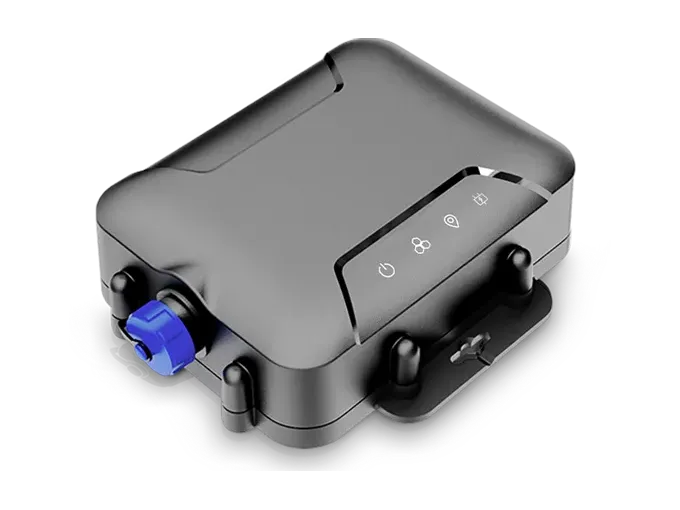
Features.
-
Ships with a SIM validated on LTE-M, so it connects the day it arrives
-
Runs from vehicle power, a 12 V supply, or a solar panel
-
Buffers scans on board when the network drops and uploads them when it returns
-
Ignition detection off the vehicle ACC line, so a truck-mounted hub follows the engine
-
IP67 and UV-stable polycarbonate, rated to +70 °C
-
Reports its own battery level and supply voltage alongside the scan data
The facts sheet.
Radios
- BLE 5.3 (Nordic nRF52840)
- LTE-M / NB-IoT (Nordic nRF9160-SICA)
- GPS / BeiDou for the hub's own position
Network
- LTE-M
- NB-IoT
- No Cat 1 or Cat 4 fallback — the SIM has to support LTE-M or NB-IoT
- Processor
- Nordic nRF9160-SICA · 64 MHz Arm Cortex-M33 · 1 MB flash / 256 KB RAM
- Range
- 100 m+ BLE scan
- Power
- Vehicle 8–52 V · 12 V DC · 12 V solar · optional rechargeable lithium battery
- Enclosure
- IP67 · UV-stable polycarbonate
- Dimensions
- 131.4 × 109.1 × 34 mm
- Operating temp
- -20 °C to +70 °C
- Warranty
- 2 years standard · lifetime with on-premise service
Built for.
- 01 Remote yards and laydown areas with no site network
- 02 Service trucks and mobile equipment
- 03 Short-term and rented sites where pulling cable is not worth it
- 04 Anywhere the only available uplink is cellular
Why we ship it
The OLR assumes there is a network to join. Plenty of sites do not have one. A laydown yard three miles down a haul road, a rented lot for a six-month job, a service truck that is somewhere different every day — none of them have an access point to put a hub on, and running one is either impossible or costs more than the tracking does.
The MG5 solves that by carrying its own connection. It scans BLE the same way the OLR does and reaches Fleet over LTE-M instead of over your network. Power is the other half of the problem, so it takes vehicle power at 8–52 V, a plain 12 V supply, or a solar panel, which means a hub can go somewhere with no mains and stay there.
When the signal drops it keeps scanning and stores what it hears on board, then uploads the backlog once it reconnects. A cellular dead spot costs you a delay, not a gap in the record.
Read this before you order: the SIM
The MG5 is LTE-M and NB-IoT only. There is no Cat 1 or Cat 4 fallback. This is a property of the radio, not a setting, and it is the single thing most likely to go wrong with this product.
The practical consequence: a generic prepaid data SIM will not work. It will look like it should, and it will never attach. We have watched this happen, and the hardware is fine every time.
So we ship the MG5 with a SIM we have already validated on LTE-M for the region it is going to. If you would rather use your own carrier, that is fine, but confirm with them in writing that the plan carries LTE-M or NB-IoT on the towers covering your site. “It’s LTE” is not the same answer.
About the GPS
The MG5 has GPS and BeiDou, and it reports where the hub is. That is useful when the hub is bolted to a truck, because you know which part of the site the scan data came from.
It does not track your assets by GPS. Tagged equipment is still located by which hub hears it, the same as everywhere else in the platform, and a passive BLE tag has no GPS in it. If a vendor tells you otherwise about a tag that runs for years on a coin cell, ask what the battery life looks like with the GPS on.
Pairs well with
- OLR on the parts of the site that do have a network, with the MG5 covering the outlying areas that do not
- G1 indoors, where the buildings have power and WiFi
- Fleet for the asset view, which does not care which hub the data arrived through
- Echolo On-Premise Edge when a site needs local-first decisions and the cellular link is only for reporting
Want to see it on your fleet?
Twenty minutes on a call. We open Fleet, go through your equipment types, and tell you what a deployment across your sites would take. The person on the call is the person who writes the code.
Request a demo