
Rental hours and the return-day argument
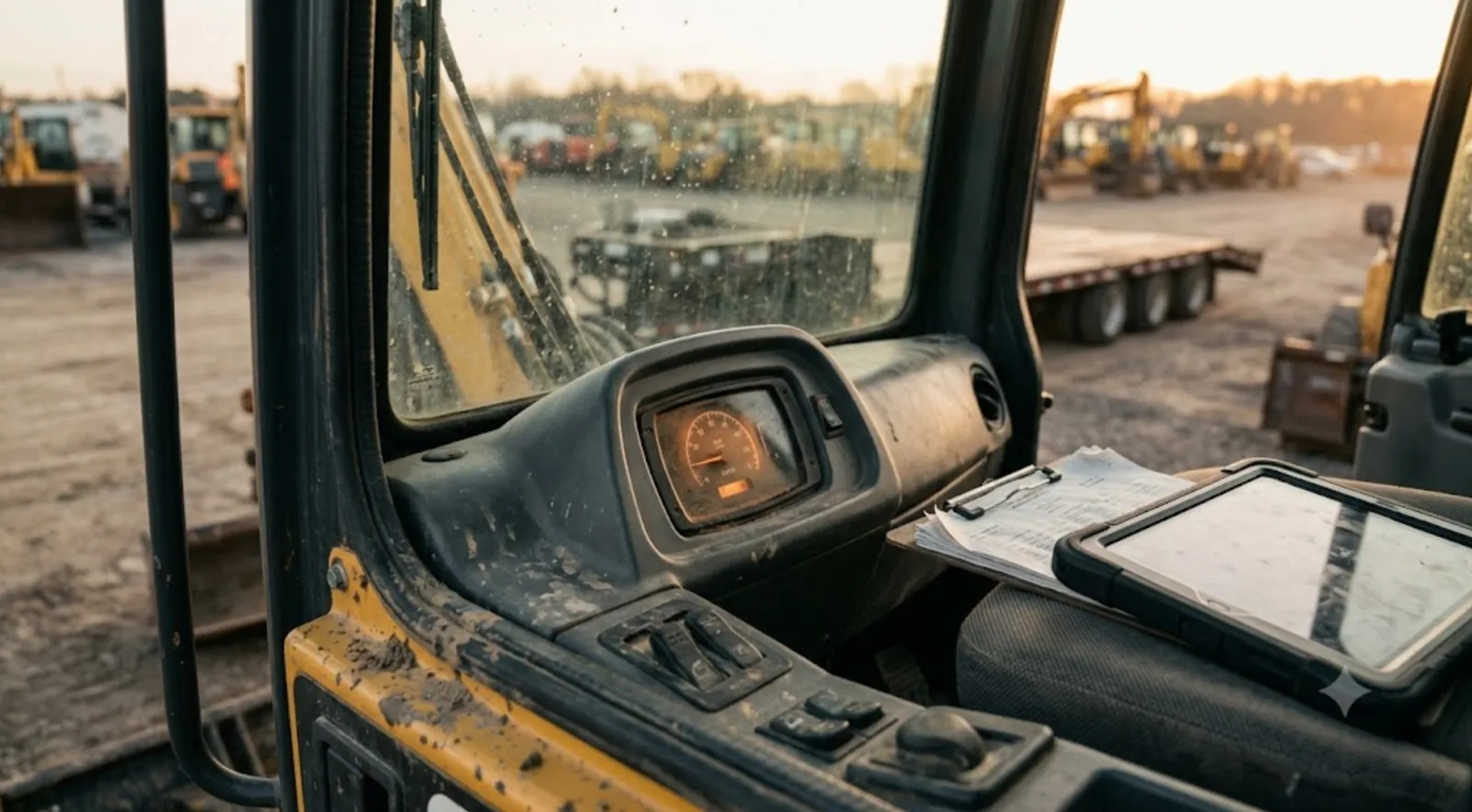
Almost no off-highway fleet is all-owned. The fleet that calls us has owned iron, a few machines bought used, and a rotating cast of rentals — a couple of skid-steers from one house, an excavator from another, a genset somebody grabbed for a six-week job. We wrote about why that heterogeneity is the actual problem in this category. The rentals have their own special version of it, and it shows up on one specific day: return day.
The setup looks simple
You rent a machine. The rental house reads the hour meter at pickup — say 3,420. The machine comes back, they read it again — 3,600. You ran it 180 hours, you’re billed for 180 hours. Clean.
It is clean, right up until the number on the invoice doesn’t match the number in your head. And on a fleet of any size, eventually it doesn’t.
Why the two numbers disagree
The meter isn’t lying. But “180 hours” is the answer to a question nobody pinned down at pickup:
- What does the meter count? Key-on? Engine-running? Engine-running-under-load? A machine that idles all day at a fueling station accrues hours on an ignition-based meter that it never accrued doing work. If you assumed you were renting work hours and the contract bills key-on hours, the gap is real and it’s in the rental house’s favor. This is the same definition problem we hit on owned iron, just with money attached — see what “running” actually means.
- You couldn’t see the meter for six weeks. Between the two reads, the meter is a black box. If it got bumped, reset, swapped with the engine, or read wrong at pickup, you find out at settlement, when it’s an argument instead of a note.
- The machine left your site. Rentals get “borrowed” to a second job, run by a crew you didn’t authorize, or sub-rented down the chain. The hours are real; they just aren’t yours.
- Idle is the whole fight. Most disputes we’ve seen aren’t fraud. They’re a hundred-plus hours of idle that the renter never thought of as “use” and the contract counts as exactly that.
What telemetry actually gives you
A non-invasive tag on a rental doesn’t replace the rental house’s meter. It gives you the thing the meter doesn’t: a continuous, timestamped record of what the machine did between the two reads.
Not a single number at the end — a curve. When it ran, when it sat, when it was on your site versus somewhere else, and roughly how hard it worked. When the invoice says 180 and your record says the machine was keyed-on 178 hours but doing actual work for 138, you’re no longer arguing about whose number is right. You’re both right, and now you’re having the correct conversation: what the contract bills on.
That’s the win. Telemetry doesn’t override the contractual meter. It corroborates it — and a defensible second source turns a he-said-she-said into a reconciliation.
The retrofit catch: you don’t own it
You can’t treat a rental like your own asset. You’re not tapping the J1939 bus on a machine you give back in six weeks, and most rental houses will say no to anything wired anyway.
What works is a BLE beacon, magnetically mounted, no power tap, no CAN, no holes. It rides along for the rental and comes off on return day. Your site gateway sees it the same way it sees everything else — the asset doesn’t need its own modem, it needs to be in range of a hub. The beacon won’t read the OEM engine ECM, so it’s giving you motion, location, and a duty-cycle proxy, not the manufacturer’s hour count. For settling a return-day dispute, that’s the corroboration you need, not a replacement meter.
If the machine is on a long rental and the bus is accessible and the house agrees, a CAN integration gets you the real ECM hours. That’s a separate decision with real-power risk, and on most short rentals it isn’t worth it.
What it catches, in practice
- Double-billing on idle. The biggest one. You see the idle-versus-work split and renegotiate or eat it knowingly.
- The machine that ran somewhere else. Geofence-leave plus a gap in your gateway’s record is a strong tell that the hours on the invoice weren’t accrued on your job.
- The meter that jumped. A discontinuity in the contractual reading that your continuous record doesn’t support is worth a phone call before you pay.
- The honest correction in your favor. Sometimes the telemetry says you ran it more than the meter shows. Pay it. Being the fleet that reconciles both directions is how you keep the rental house picking up the phone.
What we recommend
- Photograph the meter at pickup and dropoff, with a timestamp. It’s free, it’s the cheapest dispute insurance there is, and almost nobody does it.
- Beacon every rental over a few weeks. Short grabs aren’t worth the trip; anything that’s on site long enough to generate a real bill is.
- Define the billing basis in the contract — key-on, engine-on, or under-load hours — and make sure it matches what your telemetry measures. Reconciling two numbers that count different things is a guaranteed fight.
- Reconcile per machine, not in aggregate. The same discipline we use for telemetry-versus-clipboard CMH applies here: a fleet-wide average hides the one rental that’s off by 80 hours.
The goal isn’t to win an argument with the rental house. It’s to make the return-day number boring — agreed on by both sides, backed by a record, settled in five minutes instead of five emails.
If your fleet runs a mix of owned and rented iron and return day is a recurring headache, get in touch — we can walk through what a non-invasive rental tag does and doesn’t tell you.