
Location isn't utilization
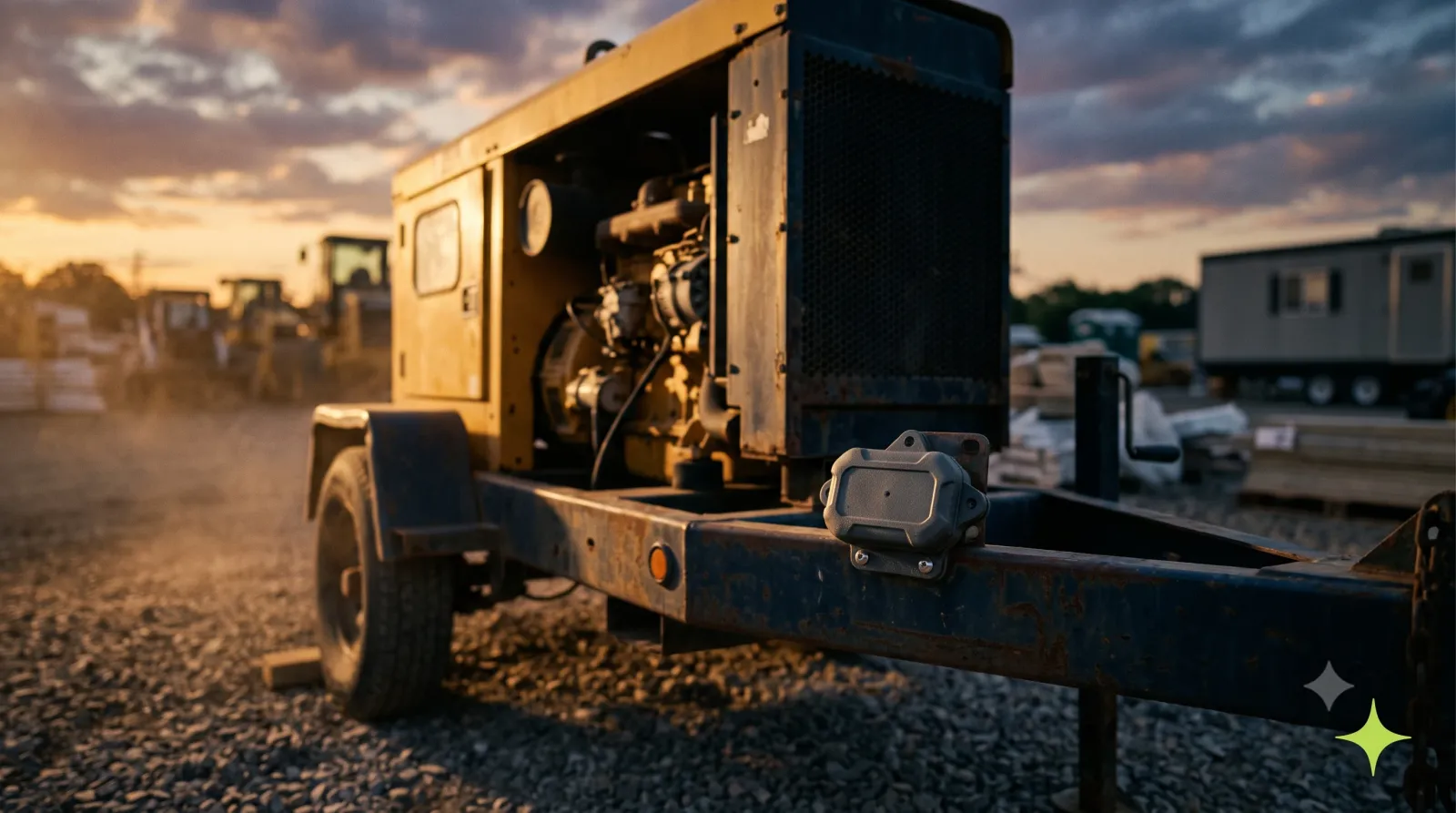
There’s a demo every asset-tracking vendor gives. A map, a scatter of dots, each dot a piece of equipment, and the line: “there’s your fleet.” It’s a good demo. It answers a real question — where is my stuff. And it quietly implies it’s answering a second question that it isn’t: is my stuff working.
Those are different questions. Confusing them is the most common mistake we see in this category, and it’s an expensive one.
Presence is not usage
A Bluetooth tag broadcasts an ID. A reader nearby hears it. Now you know the tag — and the thing it’s bolted to — is here. That’s presence, and it’s genuinely useful: find a misplaced attachment, prove a machine was on site, know which yard a generator is sitting in.
But presence is a yes/no. A tag on a generator that ran 200 hours last month and a tag on an identical generator that hasn’t turned over in three weeks broadcast the exact same thing: present. The map can’t tell them apart, because it was never measuring the difference.
And the difference is the whole game. Utilization, service intervals, warranty, idle cost — every one of those is a question about hours, not about position. A location system, however precise its dots, simply doesn’t carry the data to answer them.
The hours are hardest on the gear that needs them most
If a machine has an engine computer, hours are easy: read the bus. Over-the-road trucks, late-model big iron, anything with a J1939 port. That’s a solved problem, and plenty of tools solve it well.
The trouble is the rest of the yard. Compressors, light towers, gensets, pumps, tugs, dock equipment, non-powered attachments, the thirty-year-old machine nobody can find the manual for. Much of it has no engine bus to read and no steady power to run a cellular tracker. It is also, very often, exactly the equipment sitting on an hour-based service interval.
So the assets that most need an hours number are the ones the location-and-CANbus approach can’t produce one for. It hands them a dot on a map and calls it tracking.
A wireless hour-meter
The fix isn’t a better map. It’s moving the hour-counting onto the tag itself.
An accelerometer feels the machine run. The tag accumulates that run-time on the device and broadcasts the cumulative total — so a hub polling every few minutes reads an ever-climbing hours figure, not just “present.” It’s a wireless hour-meter that happens to also tell you the asset is here.
No engine bus. No per-asset SIM and no monthly cellular line per machine. No wiring into the OEM’s electrical system and inheriting its voltage spikes. A coin cell and a radio, riding the machine for years. The same simple device that gives you presence is the one that gives you the number presence never could.
What hours unlock that a dot doesn’t
Once you’re actually counting hours on every asset — not just the ones with a bus — the maintenance program has something to stand on:
- Service intervals that fire on the un-telematized iron. The 490-hour service comes due because the machine reported 490 hours, not because somebody guessed off a logbook.
- Utilization you can trust, per asset — so “is this machine earning its keep, or just idling?” finally has an answer.
- A warranty conversation with evidence instead of a clipboard — which turns out to matter more than anyone expects.
The catch is that it has to be the right hours, captured cleanly, which is its own discipline — what you even mean by an hour, and why telemetry and the clipboard disagree. But that’s a solvable problem. “We have no hours at all on half the fleet” is the harder one, and it’s the one presence-only tracking leaves you with.
When location is the right answer
None of this makes location worthless. If your problem is theft recovery, or a geofence around a jobsite, or knowing where an over-the-road truck is this exact minute, then a GPS-and-cellular tracker is the correct tool and you should buy one. Those are real jobs, and a live dot on a map does them well.
We just won’t let a location dot stand in for a utilization number, because across a real, mixed, half-rented, partly-ancient fleet it can’t. Where it is and whether it’s working are two separate questions. Sell someone the first and let them believe they bought the second, and they find out the difference the first time a warranty claim turns on hours nobody was counting.
The question that runs a maintenance program isn’t “where is it.” It’s “is it working, and is it due.” Answer those two and location mostly takes care of itself — you always know which site last heard the tag. Answer only location, and you still don’t know the thing you actually needed to.
If you’re trying to get trustworthy hours off equipment that was never built to report them, get in touch — that’s the problem we’re built for.